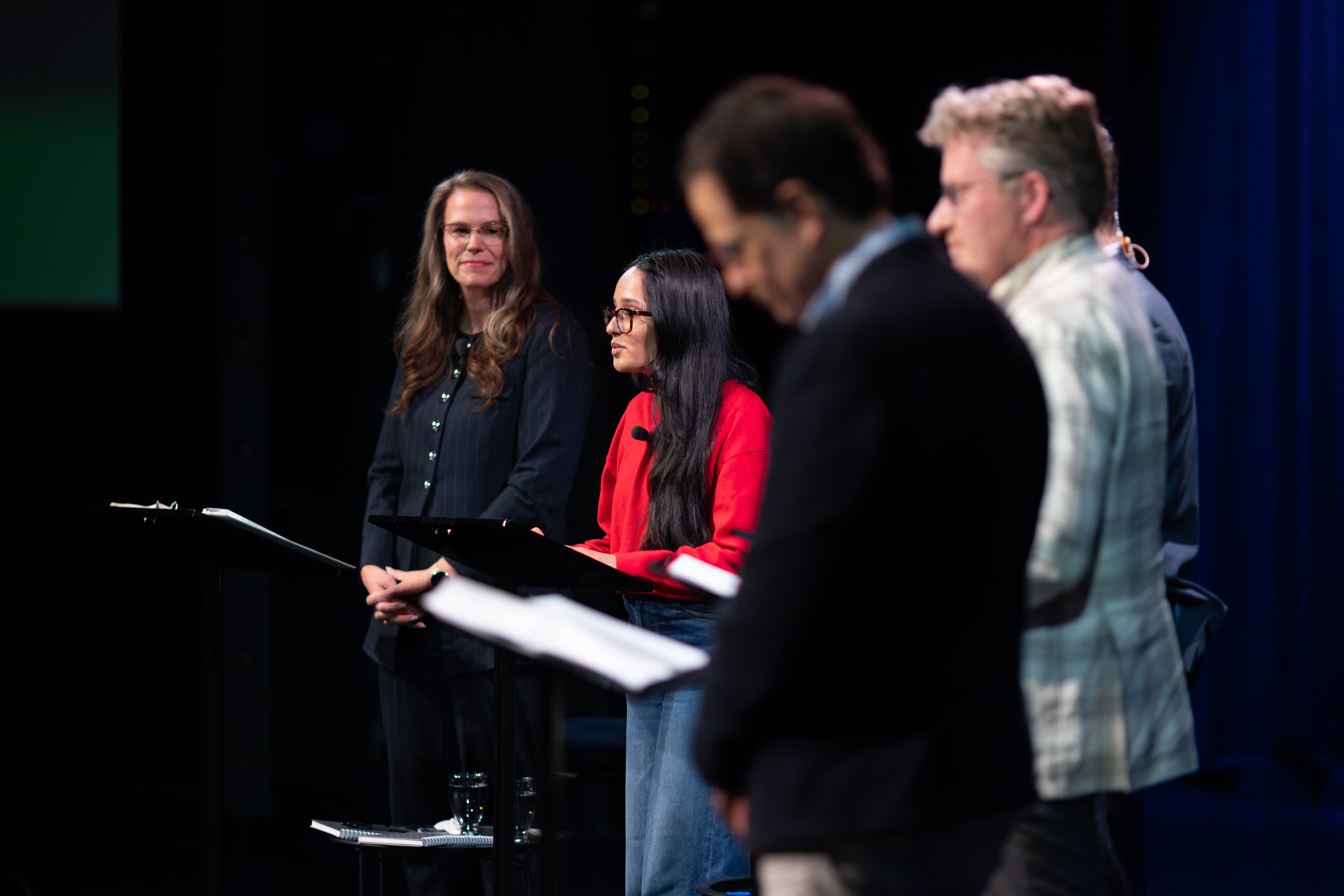
Operating in a non-native language is exhausting, especially when your intelligence is brought into question, and it feels like your education is not adequately supported. Researchers Dr. Anita Chaudhuri, Dr. Jing Li, Dr. Jordan Stouck, and Dr. Steve Marshall developed the PRISM Framework as part of a growing effort to expand current teaching practices to include diverse perspectives in first-year writing courses. They assert that success in academic writing can be achieved in more ways than one, and assessing students via narrow, monolingual criteria overlooks their personal skill set and lived experiences.
The PRISM Framework outlines the challenges that emerge from rewarding standardized academic English (SAE) and provides appropriate alternative teaching practices for instructors to help overcome them, e.g., cross-lingual assignments, academic writing in non-traditional genres such as letters or food recipes, and reflection on what “good writing” looks like.
The central idea and motivation behind the project is linguistic equity, and the rejection of a “deficit mindset.” On this, Chaudhuri mentioned: “Linguistic equity is that language is learned in many different ways. It makes us become learners. Metacognition. Strategies. We pick up a new set of words and put it together,” acknowledging that not everybody can be one type of learner. Chaudhuri continued: “I am just not catering to a singular set of expectations, but a diverse one.”
Ji stated: “Beginner English doesn't mean they can't learn. They have their own experience and professional expertise to bring to the classroom, and they can be just as helpful,” describing the deficit mindset as what allowed English-dominated institutions to make fluency in SAE the baseline for intelligence and competency, so a student’s language barrier was treated as a weakness rather than as a potential asset.
‘P’ stands for plurilingual, the ability to conveniently switch between different languages. The use of SAE in first-year classes often sidelines multilingual students who might benefit from learning and writing in a non-English language, and also reinforces a linguistic hierarchy that urges students to distance themselves from their preferred language in favour of SAE.
Stouck expressed that: “Changing some of our ideas and expectations about language is the main point of this project. Alongside valuing home languages and various Englishes, part of it is also working towards code meshing,” and this effort helps ensure that certain languages are not put on a pedestal.
‘R’ stands for raciolinguistic. It examines how language constructs race and how racial biases shape the perception of non-English languages. Stouck mentioned that: “Rethinking teaching first-year writing felt [like] a way to start being more inclusive.” Combating English standardization could help in dismantling those biases early and address how multilingual students feel racially discriminated against for not knowing SAE.
‘I’ stands for Indigenous, and addresses how prioritizing SAE has further marginalized Indigenous communities. This part of the framework also emphasizes the value in using identity as a means of navigating language.
However, the PRISM framework cannot be applied analogously across all local communities. Stouck mentioned that: “We are thinking this through in our local context, and indigenous communities nationwide would have to think about that on their own.” Regarding what was shared during a knowledge exchange workshop that was held in the summer of 2026, Stouck stated: “Different facets would have different considerations. People in the workshop had discussions on how they could make use of this aspect and really think this through,” clarifying that the framework can be dynamic to fit different contexts.
‘S’ stands for social justice and taking action outside of the classroom, like community-building or advocacy efforts to empower students in non-academic spaces. A Speaker Series held in May 2025, which brought together researchers across various disciplines, highlighted how one of the PRISM Framework’s biggest responsibilities is to decolonize language in order to achieve linguistic equity and justice. This meant creating a new standard instead of adjusting the existing standard to accommodate an outlier.
‘M’ stands for multilingual learners. Commenting on the participant takeaways from this project and what the researchers wanted to learn from them, Li said: “The public discussion framework helped us develop PRISM. [It is] not a fixed model; [it] keeps evolving and changing. Writing centers people at UBCO.” Chaudhuri added: “How learners are being equitable, inclusive. Different strategies they are employing, in teaching and engaging.”
The PRISM Framework is a guide. It aims to recognize multilingualism as fundamental to learning, and prioritize linguistic equity to enhance the student experience. An institutional reform has been long overdue, and it begins with instructors and the students.