On October 24, the BC Conservatives won British Columbia’s provincial election by a landslide, ousting the New Democratic Party (NDP) after nine years of rule. After several months of disarray and factions within the Conservative Party before the election, many British Columbians are unsure what to expect from Lorne Doerkson’s party.
British Columbians provided the Conservative Party with its first majority since 1928; however, the province is not particularly left-wing. Rather, the Conservative Party simply did not exist in the Legislature from 1975 to 2024. During this period, the centre-right BC Liberals, more recently known as BC United, competed with the NDP for power.
Yet for young British Columbians, a centre-right party governing the province will be a new, and for some, alarming, experience. An examination of the Conservative Party’s official election platform and Lorne Doerkson’s promises reveals that major changes may occur over the next few years.1
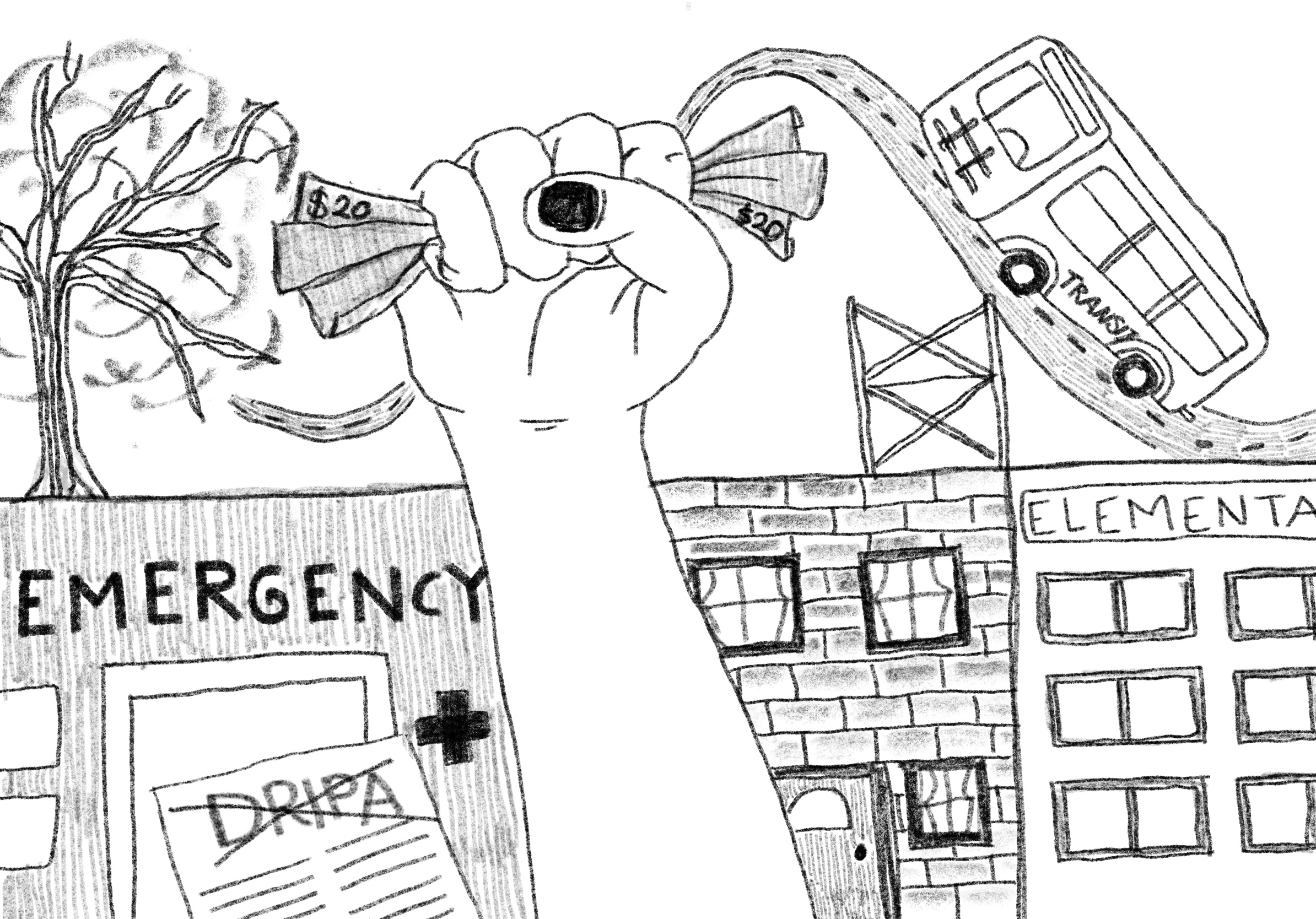
Doerkson has repeatedly affirmed his plan to repeal the Declaration on the Rights of Indigenous Peoples Act (DRIPA), which requires provincial legislation to be consistent with the United Nations Declaration on the Rights of Indigenous Peoples (UNDRIP). He argues that DRIPA has failed to create “the security … that it was meant to achieve”.<2/sup>
DRIPA has faced endless controversy due to the requirement of Free, Prior, and Informed Consent (FPIC) for projects impacting Indigenous lands or resources. FPIC is sometimes viewed as providing a veto power to Indigenous Peoples that results in delayed or cancelled mining, forestry, and energy projects.
Additionally, since the B.C. Court of Appeal ruled that DRIPA’s language is legally binding, there have been widespread concerns over how Indigenous land claims might impact private property. The Conservative platform lists repealing DRIPA under the Protect Private Property Rights section.
Post-election, Doerkson affirmed that he is “going to repeal DRIPA”3, despite Grand Chief Stewart Phillip, President of the Union of B.C. Indian Chiefs, warning that repealing DRIPA would be viewed by First Nations as “a declaration of war”.4
The BC Conservatives are also planning to repeal CleanBC, a climate action strategy introduced in 2018 to help the province transition to cleaner energy across all sectors. Repealing CleanBC will “remove barriers to investment and growth”, though Doerkson will keep a carbon price on large-scale industrial emitters and their revenue.1
Furthermore, the Conservatives have numerous energy plans with negative environmental impacts, such as making B.C. an “energy superpower” by doubling liquefied natural gas (LNG) production by 2032 and tripling it by 2035, as well as increasing coastal drilling. However, they also plan to support hydroelectricity upgrades and geothermal projects with less environmental impact.1
To address the rising cost of living, the BC Conservatives will raise the provincial basic personal amount from $13,216 to $32,000, which will cut income tax by approximately $1,000 per person. They will also incentivize businesses to employ young people through a First Job Tax Credit, providing businesses a credit on the first $5,000 of payroll for an employee’s first job.
The Conservatives will end the zero-emission vehicle sales quota, which requires an increasing percentage of sold cars to be zero-emission vehicles. In addition, they plan to replace the NDP’s no-fault insurance model with a hybrid model, enabling severely injured victims to seek compensation.
Along with the potential for private competition in auto insurance, these changes may lead to significantly higher insurance premiums. At the end of the fiscal year in spring 2027, the Insurance Corporation of British Columbia (ICBC) may increase its basic auto insurance rate for the first time since 2020.
Doerkson has repeatedly stressed his commitment to protecting universal public healthcare, despite widespread concerns that his tax plan will create a significant hole in the provincial budget and thus reduce healthcare capacity.
The party will also make changes to the education system, including restoring letter grades and provincial examinations, further limiting phone use in schools, and introducing financial literacy, civics, and AI safety courses. The government will also repeal SOGI 123, a framework to help teachers stop bullying based on students’ sexual orientations and gender identities. Instead, the party will make sure bullying based on “personal characteristics” is addressed directly.1
Finally, the Respect Local Democracy Act will likely be one of the new government’s first pieces of legislation. It will permanently separate provincial and municipal election calendars, requiring at least 60 days between them. However, Doerkson has not yet clarified whether this will be achieved by shortening or lengthening his government’s term in office.
Regardless of the length of Doerkson’s mandate, the first Conservative majority in 98 years will certainly bring significant change across the province.